
Top Ten Social Media Handle Tool In 2006

If you mean the top social media management tools in 2006, it’s important to note that the industry was still in its early stages. Most modern platforms (such as Buffer, Hoot suite, and Sprout Social) did not exist yet. Businesses primarily used custom dashboards, RSS readers, and basic publishing software.
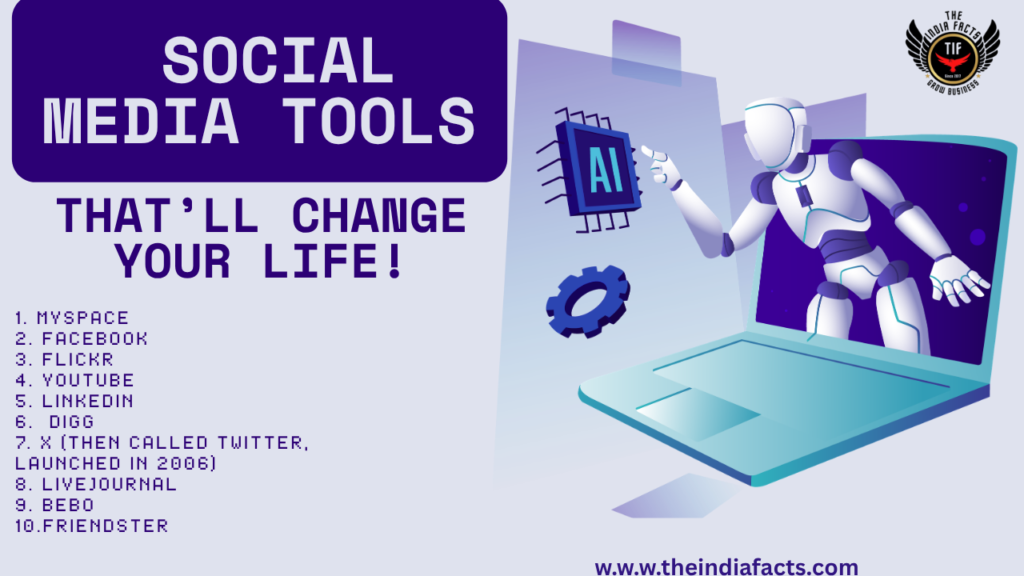
Here are ten notable tools or platforms that were relevant around 2006
- MySpace
- Flickr
- YouTube
- Digg
- X (then called Twitter, launched in 2006)
- LiveJournal
- Bebo
- Friendster
MySpace –
- MySpace was one of the world’s most popular social networking platforms during the mid-2000s, especially between 2005 and 2008. It allowed users to create personal profiles, connect with friends, share media, and customize their pages.
Around 2006, MySpace was the largest social networking site in the world, with over 100 million registered users. It played a major role in shaping modern social media and helped launch the careers of many musicians before newer platforms became dominant.
Today, MySpace still exists but has shifted its focus toward music and entertainment rather than general social networking.
Key Features –
- Customizable Profiles: Users could personalize profile pages with HTML, CSS, images, music, and backgrounds.
- Friends Network: Add friends and build a social network.
- Messaging: Send private messages between users.
- Bulletins: Share announcements with all friends.
- Blogs: Publish personal blog posts directly on profiles.
- Photo Sharing: Upload and organize photo albums.
- Music Integration: Bands and musicians could upload songs and promote themselves.
- Events: Create and promote social events
Face book –
- Face book is a social networking platform that allows people to connect with friends, family, communities, and businesses online. Today, Face book is owned by Meta Platforms, the company that also owns instagram , WhatsApp, Messenger, and Threads
Face book grew from a college networking site into one of the world’s largest social media platforms, with billions of users worldwide. It has become a major platform for communication, advertising, news sharing, and online communities
Key Features –
- Profiles – Create a personal profile with photos, interests, and information.
- Friends – Connect with people you know.
- News Feed – View posts, photos, videos, and updates.
- Customizable Profiles: Users could personalize profile pages with HTML, CSS, images, music, and backgrounds.
- Friends Network: Add friends and build a social network.
- Messaging: Send private messages between users.
- Bulletins: Share announcements with all friends.
- Blogs: Publish personal blog posts directly on profiles.
- Photo Sharing: Upload and organize photo albums.
- Music Integration: Bands and musicians could upload songs and promote themselves.
- Events: Create and promote social events
Flickr –
- Flickr is a photo and video hosting and sharing platform where users can upload, organize, edit, and share their images with others. It is popular among photographers, artists, hobbyists, and anyone who wants to store and showcase digital photos.
Key Features –
- Photo and video uploads – Store and share high-quality photos and videos.
- Albums and collections – Organize photos into albums for easy management.
- Communities (Groups) – Join groups based on photography interests or topics.
- Search and tags – Use tags, titles, and descriptions to make photos easier to find.
- Comments and favorites – Interact with other users by commenting on or favorite their photos.
YouTube –
- YouTube is one of the world’s largest video-sharing platforms. It allows users to upload, watch, share, comment on, and live stream videos covering topics such as education, entertainment, music, gaming, news, and technology.
Today, YouTube is used by billions of people worldwide and is one of the most popular platforms for video sharing, online learning, entertainment, and digital content creation
Key Features –
- Channels: Creators can build their own channels and grow an audience. .
- Playlists: Videos can be organized into custom playlists.
- YouTube Shorts: Create and watch short vertical videos.
- Live Streaming: Broadcast live events, classes, gaming sessions, and more.
- Comments and Community Posts: Interact with creators and other viewers.
- Captions and Translation: Many videos include subtitles and support multiple languages.
LinkedIn –
- LinkedIn is a professional networking platform that helps people build careers, connect with colleagues, find jobs, recruit employees, and share industry knowledge. It is widely used by professionals, students, recruiters, and businesses around the world.
Key Features–
- Professional Profile: Create an online resume with your education, work experience, skills, and achievements.
- Networking: Connect with colleagues, classmates, recruiters, and industry professionals.
- Job Search: Search and apply for jobs in different industries and locations.
- Company Pages: Follow companies to receive updates about jobs and news.
- Content Sharing: Publish posts, articles, and professional updates.
- Messaging: Communicate directly with your professional connections.
- Learning: Access online courses through LinkedIn Learning.
Digg –
- Digg is a social news aggregation platform where users can discover, share, and discuss news stories and interesting content from across the internet. Rather than creating most of the content itself, Digg highlights articles, videos, and other media from a wide range of publishers.
Key Features –
- News Discovery: Browse trending stories from different topics such as technology, science, entertainment, politics, and culture.
- Content Curation: Editors and algorithms select popular and noteworthy articles.
- Sharing: Share interesting stories with others through social media or direct links.
- Reading Experience: Read summaries and follow links to the original publisher.
- Topic Categories: Explore news based on your interests.
X (then called Twitter, launched in 2006) –
- X is a social media and micro blogging platform where users share short posts, photos, videos, and live updates. It is widely used for news, public discussions, entertainment, sports, politics, and communication between individuals, organizations, and businesses.
Today, X remains one of the world’s most influential social media platforms, with millions of users using it to discuss current events, follow public figures, and share ideas in real time.
Key Features –
- Posts: Share short text updates, photos, videos, GIFs, and links.
- Replies: Join conversations by responding to other users’ posts.
- Reposts: Share another user’s post with your followers.
- Hash tags: Organize and discover content by topic.
- Trending Topics: See what subjects are being widely discussed.
- Communities: Join groups focused on shared interests.
- Spaces: Participate in or listen to live audio conversations.
- Direct Messages: Send private messages to other users.
Live Journal –
Live Journal is a blogging and social networking platform where users write journal-style posts, share updates, and interact with communities. It became especially popular in the early 2000s as one of the first major platforms combining personal blogging with social features like comments and friend lists. Live Journal is often considered an early pioneer of social blogging, helping shape how people share personal content and form online communities today.
Key Features –
- Personal journals: Users publish blog-style entries about their life, interests, or opinions.
- Friends system: Follow other users to see their updates in a feed.
- Communities: Join topic-based groups (e.g., fandom’s, writing, tech).
- Comments: Readers can respond to posts and start discussions.
- Customization: Users can personalize journal layouts and styles.
- Privacy controls: Posts can be public, friends-only, or private.
- Bebo was a social networking platform that was especially popular in the mid-to-late 2000s. It allowed users to create profiles, connect with friends, share photos, write blog-style posts, and customize their personal pages.
- You can still visit its current site at Bebo , although it has gone through multiple relaunches and is no longer a major global social network.

Bebo –
Bebo was a social networking platform that was especially popular in the mid-to-late 2000s. It allowed users to create profiles, connect with friends, share photos, write blog-style posts, and customize their personal pages.
You can still visit its current site at Bebo, although it has gone through multiple relaunches and is no longer a major global social network.
Bebo is remembered as one of the early social networking pioneers that helped shape online social interaction before modern platforms like Instagram, X, and Facebook became dominant.
Key Features (during its peak) –
- User profiles: Customizable personal pages with themes and layouts
- Friends list: Connect and interact with other users
- Blog posts: Share updates, thoughts, and status messages
- Photo sharing: Upload and comment on images
- Widgets and customization: Highly customizable profile design
- Groups: Communities based on interests
Friendster –
- Fraudster was one of the first major social networking websites on the internet. It allowed users to create profiles, connect with friends, and interact through messages and shared content. It played a key role in shaping the idea of modern social media.
You can still visit its domain at Fraudster, although the original social network has long been shut down. Friendster is considered a pioneer of social media. Its ideas influenced the development of many modern platforms such as Instagram, LinkedIn, and X.
Key Features (during its peak) –
- User profiles: Customizable personal pages with themes and layouts
- Friends list: Connect and interact with other users
- Blog posts: Share updates, thoughts, and status messages
- Photo sharing: Upload and comment on images
- Widgets and customization: Highly customizable profile design
Groups: Communities based on interests
Now Top10 Social Media Handle Today Use
- Facebook: General social networking and communities.
- YouTube: Educational, entertainment, and live video content.
- WhatsApp: Fast and reliable personal and business communication.
- Instagram: Visual content, influencer marketing, and brand promotion.
- TikTok: Viral short videos and creative content.
- WeChat: An all-in-one platform widely used in China. .
- Telegram: Large group chats, channels, and privacy-focused messaging.
- Snapchat: Temporary content and augmented reality (AR) filters.
- X: Real-time news, discussions, and public conversations.
These platforms are among the most widely used globally, though their popularity can vary by country and region.
WhatsApp –
WhatsApp is a free messaging and calling application that enables users to send text messages, make voice and video calls, share photos, videos, documents, and locations, and communicate through group chats using an internet connection. It is one of the most widely used messaging apps in the world. Today, WhatsApp is one of the world’s leading messaging platforms, helping individuals and businesses communicate quickly and securely across the globe.
Key Features –
- Instant Messaging: Send text messages to individuals and groups.
- Voice and Video Calls: Make free calls over the internet.
- Group Chats: Create groups to communicate with multiple people.
- Media Sharing: Send photos, videos, documents, voice messages, and contacts.
- Status Updates: Share text, photos, videos, or GIFs that disappear after 24 hours.
- Location Sharing: Share your live or current location with trusted contacts.
- End-to-End Encryption: Personal messages and calls are encrypted so that only the sender and recipient can access their content.
- Multi-Device Support: Use WhatsApp on multiple linked devices without keeping your phone constantly connected.

Instagram: –
Instagram is a popular social media platform for sharing photos and videos. Users can post content, create short videos called Reels, share temporary Stories, send direct messages, and interact with others through likes, comments, and shares. Today, WhatsApp is one of the world’s leading messaging platforms, helping individuals and businesses communicate quickly and securely across the globe.
Key Features –
- Photo and Video Sharing: Post photos and videos with captions and hash tags.
- Reels: Create and watch short, entertaining videos.
- Direct Messages (DMs): Send private messages, photos, and videos.
- Explore Page: Discover new creators, trends, and content based on your interests.
- Shopping: Browse and purchase products from participating businesses.
- Broadcast Channels: Eligible creators can send one-to-many updates to followers.
TikTok: –
TikTok is a social media platform for creating, sharing, and discovering short-form videos. Users can make videos with music, filters, effects, text, and editing tools. TikTok is popular for entertainment, education, lifestyle, comedy, dance, and marketing content.
Today, TikTok is one of the leading social media platforms, widely used for entertainment, education, creative expression, and digital marketing.
Key Features –
- Photo and Video Sharing: Post photos and videos with captions and hashtags.
- Reels: Create and watch short, entertaining videos.
- Live Streaming: Broadcast live video to your followers.
- Direct Messages (DMs): Send private messages, photos, and videos.
- Explore Page: Discover new creators, trends, and content based on your interests.
- Shopping: Browse and purchase products from participating businesses.
- Broadcast Channels: Eligible creators can send one-to-many updates to followers.
WeChat:-
WeChat is a multi-purpose mobile application that combines messaging, social networking, digital payments, and many everyday services into one platform. Developed by Tencent, it is one of the most widely used apps in China and is often described as a “super app” because it offers many functions beyond messaging.
Today, WeChat is one of the world’s most influential mobile platforms, serving as both a communication tool and a gateway to a wide range of digital services.
Key Features –
- Instant Messaging: Send text messages, voice messages, photos, videos, and files.
- Voice & Video Calls: Make free internet-based audio and video calls.
- Group Chats: Communicate with multiple people in one conversation.
- Moments: Share photos, videos, and status updates with friends.
- WeChat Pay: Make cashless payments, transfer money, and pay bills (available in supported regions).
- Mini Programs: Use lightweight apps within WeChat for shopping, booking services, games, food delivery, and more.
- Official Accounts: Follow businesses, news organizations, and government agencies for updates and services.

Telegram:-
Telegram is a cloud-based messaging and communication app known for its speed, privacy features, and large group/community tools. It allows users to send messages, photos, videos, files, and create large group chats and broadcast channels.
Today, Telegram is one of the most popular messaging platforms worldwide, especially for communities, creators, and users who prefer flexible group communication and privacy-focused tools.
Key Features –
- Cloud Messaging: Access messages from multiple devices at the same time.
- Large Groups: Supports groups with thousands (and even hundreds of thousands) of members.
- Channels: Broadcast messages to unlimited subscribers.
- File Sharing: Send large files (documents, videos, audio, etc.).
- Voice & Video Calls: Secure communication with contacts.
- Stickers & Reactions: Express emotions with custom stickers and emojis.
- Bots: Automated tools for tasks like news updates, games, or customer support.
- Secret Chats: End-to-end encrypted chats with self-destruct timers.
Snapchat:
Snapchat is a popular social media and instant messaging app developed by Snap Inc.. It lets users share photos, videos, and messages called Snaps, many of which disappear after being viewed or after a set time.
Snapchat is especially popular for casual, visual communication and has hundreds of millions of active users worldwide. It is available for both Android and iPhone, and you can also use many features on a computer through Snapchat for Web.
Snapchat’s main features-
- Snaps: Send photos or videos that disappear after they’re viewed.
- Stories: Share photos and videos that remain visible to your friends for 24 hours.
- Chat: Exchange text messages, voice notes, photos, and videos with friends.
- Video & Voice Calls: Make individual or group calls.
- Lenses & Filters: Use augmented reality effects, face filters, and creative editing tools.
- Snap Map: Share your location with friends (if you choose) and see what’s happening around the world.
- Memories: Save your favorite Snaps and Stories privately in the app.
- Bitmoji: Create a personalized cartoon avatar to use in chats and Stories. Bitmoj
conclusion – In 2006, social media was still in its early global expansion phase. The platforms that dominated were very different from today’s apps like Snapchat or Instagram.
Conclusion: Top Social Media Platforms Around 2006
In 2006, the “top ten” social media tools were mainly focused on networking, sharing content, and early online communities:
- MySpace — The most popular social networking site at the time, especially for music and youth culture
- Facebook — Growing rapidly after opening beyond universities
- YouTube — Newly launched (2005), becoming the leader in video sharing
- Blogger — One of the biggest blogging platforms (owned by Google)
- Flickr — Popular for photo sharing
- Friendster — Early social networking pioneer, still active in some regions
- Hi5 — Widely used social network in Asia and Latin America
- Orkut — Very popular in India and Brazil (Google-owned)
- LinkedIn — Professional networking platform
- MSN Spaces — Microsoft’s blogging/social platform (later became Windows Live Spaces)
Final Conclusion
In 2006, social media was mostly about basic networking, blogging, and photo/video sharing, not short-form content or mobile-first apps. Platforms like MySpace and Facebook shaped the foundation of today’s social media ecosystem, while YouTube began transforming online video consumption.